Do you really understand basketball rules or do you just watch the game?
Ad
Have you ever watched a game and thought, “okay, but what just happened?” Basketball rules seem simple… until the game starts!
Because once it begins, it’s pure speed, quick decisions, and details that can change everything in seconds.
And when you understand basketball rules, the game reaches another level. It becomes much more engaging.
You stop just watching… and start seeing the game with more clarity, even anticipating plays.

How Basketball Works in Practice
Basketball is a game between two teams with five players each. The goal is simple: score more points than the opponent.
But in practice, the game is fast and intense. There’s not much time to think, everything happens in motion.
Offense and defense switch constantly. And each possession can turn into points in just a few seconds.
The court becomes a space of constant decision making, where every player has an important role.
The game is divided into periods, but within them, the intensity never drops.
Basketball rules organize this fast pace. They create structure within the chaos.
The 24 Second Rule: The Time that Changes Everything
This is where real pressure begins. The team has only 24 seconds to attempt a play.
If they don’t shoot, they lose possession. And the opponent takes over immediately.
But it’s not enough to shoot randomly. The ball must hit the rim.
If it does and the team recovers it, the clock resets. And the game continues at a fast pace.
This forces the team to think quickly, create plays, and make decisions under pressure.
This rule exists to prevent the game from slowing down. It guarantees a dynamic and intense style.
That’s why every possession feels like a race against time. It’s all against the clock.
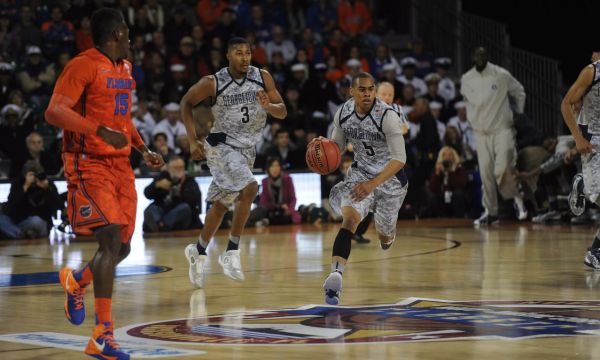
Common Violations in the Game (Like Traveling and Double Dribble)
Here come those mistakes that make the referee stop the game. And they happen more often than you think.
They are technical details, but they make all the difference in the outcome of a play.
Here are the main ones:
- Traveling: taking steps without dribbling
- Double dribble: stopping and then dribbling again
- 3 seconds in the key: staying too long in the paint
- 5 seconds: taking too long to act
- 8 seconds: taking too long to cross half-court
- Backcourt violation: returning to the defensive side after attacking
These violations result in loss of possession.
And they often happen at decisive moments, completely changing the rhythm of the game.
Over time, you start to recognize these situations almost automatically.
Fouls in Basketball: What is Allowed or Not
Now we get into physical contact, and this is where the game reaches another level of intensity.
Fouls happen when there is an illegal advantage over the opponent, breaking the balance of the play.
It can be pushing, holding, or even hitting the arm during a shot, especially in crucial moments.
Depending on the situation, the team earns free throws or possession of the ball, which can change the game.
There is also an individual foul limit, which requires control and intelligence from players throughout the game.
Because in basketball, it’s not enough to just compete… you need to know how far you can go.
Basketball rules maintain a balance between intensity and fairness. That’s what makes the game physical, yet controlled.

Technical Fouls and Their Consequences
Here, it’s not about physical contact. It’s about behavior on the court and how the player reacts to game situations.
Some actions that can lead to a technical foul:
- Arguing with the referee excessively
- Provoking opponents or showing unsportsmanlike behavior
- Delaying the game on purpose
And the consequences come quickly:
- Free throw for the opponent
- Possible possession of the ball, depending on the situation
- In repeated cases, player ejection
This shows that it’s not just about skill. The player needs to have emotional control at all times.
Because in basketball, attitude is also part of the game, and it can decide a match.
Scoring and How Points are Counted

Here, the logic is simple but full of strategy.
🟡 1 point: free throw
🟡 2 points: regular shot
🟡 3 points: long distance shot
But the impact of each point goes beyond the number.
A three point shot can completely change the game in just seconds.
And when that shot happens along with a foul, the advantage can be even greater, creating a high impact play.
Basketball rules make scoring easy to understand, but full of strategic decisions.
Because in the end, every choice on the court carries intention. And that’s what makes the game so exciting.
Time Rules that Control the Pace of the Game
Beyond the 24 seconds, there are other rules that keep the game flowing.
- 5 seconds to inbound the ball
- 8 seconds to cross the court
- 3 seconds in the key
These rules prevent the game from becoming slow or stagnant, keeping everything in constant motion.
They force teams to move all the time, looking for quick solutions in each play.
The result is a game with continuous movement, few pauses, and high intensity from start to finish.
And that’s exactly what makes basketball so engaging to watch, because the excitement practically never stops.
Differences between FIBA and NBA
This is where many people get confused, but it’s simpler than it seems.
- Game time:
FIBA → 4×10 minutes
NBA → 4×12 minutes - Foul limit:
FIBA → 5 fouls
NBA → 6 fouls - Style of play:
NBA → more offensive and faster
FIBA → more tactical and controlled
These differences change the rhythm of the game and how teams think and execute each play.
In some cases, the game becomes faster in others, more strategic and controlled.
But at its core, basketball rules maintain the same essence. It’s always about competing, scoring, and making smart decisions on the court.
Conclusion
In the end, understanding basketball rules completely changes your experience.
You start to see the game with more strategy, emotion, and understanding.
Every play gains meaning. Every decision matters more.
And that game that once seemed confusing… starts to make sense and turns into an incredible spectacle full of strategy.
So next time you watch a game, pay attention to these details. Because they reveal what is really happening on the court.
Because when you understand the game… you truly feel the game.